 Valhalla
What it is
A council, not a chatbot
Six members, each with a voice, a craft they own and the one artifact they leave behind: Mimir hosts; an architect, a product manager, a designer, a security officer and a QA engineer sit with him. Seat one, or the whole table.
A library of skills
Skills are markdown files: how to write a migration, how to review a pull request, how your team names things. The council reads the ones that match each request, so the answer follows your conventions rather than the internet's.
A well of your own knowledge
Teach it your domain in plain files. Point it at a repository and it surveys the codebase into knowledge packs itself. Every answer then starts from what you know, not from zero.
It remembers, and it stops re-litigating
Decisions are recorded and recalled. Earlier conversations are quoted back when they matter. A project carries a brief, a crew and a vault, so returning to work after a month is a page, not a scroll.
It can see your code
Rooted in a repository, a conversation reads the branch and the diff, snapshots before every turn, shows a change strip under every reply, and commits as you. "Review my changes" works without pasting anything.
Yours, on your machine
Nothing leaves your computer except the request to the AI provider you configure. No account, no telemetry, no server of ours in the middle. Every file it writes is in a folder you can read.
The members
Each is a markdown file with a mechanically written voice contract. Edit one and the edit is an override; revert and the original is back. Add your own.
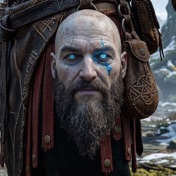 Mimirthe host · ask him when you do not know who you need
 Eitriarchitecture · will it hold, and what does it commit us to
 Skuldproduct · what ships, what is cut, what done means
 Freyjadesign · reality is a draft; here is the better one
 Heimdallsecurity · who can abuse this, and what it costs
 Ullrquality · does it work, or does it look like it works
What it looks like


How it works
You bring the model. Valhalla drives the Claude Code command-line tool you may already have installed, signed in with your Claude subscription; or Anthropic's API with a key; or any OpenAI-compatible endpoint, including a local server. It ships no model and runs none of ours.
Three layers, narrowest wins. What ships, what you keep in your home folder, and what a repository carries in its own .valhalla/ directory. A project can replace a built-in skill without forking anything; a team shares a layer by committing it.
Three surfaces, one core. The desktop window, the mimir command in your terminal, and a model router that picks a fast, balanced or deep model per turn from what the request asks for.
The documentation has the first ten minutes, the engines, and everything the app writes to disk.
Get it
Valhalla is free for personal use on macOS (Apple silicon and Intel) and Windows. Companies and anyone using it for work need a commercial licence, which is a conversation rather than a form: write to us.